
Thursday, April 15, 2010
Jersey Troopers: Sacrifice at the Altar of Public Service

Book is available for pre-order at the History Press and all major online book stores.
Will be on shelves April 30th.
Barnes and Noble
http://productsearch.barnesandnoble.com/search/results.aspx?store=BOOK&WRD=Jersey+Troopers%3A+Sacrifice
http://productsearch.barnesandnoble.com/search/results.aspx?store=BOOK&WRD=Jersey+Troopers%3A+Sacrifice
Click above link to go to the History Press webpage.


Wednesday, August 12, 2009
Keep an Eye on the Middle East

Click the Middle East Research TV Institute Link to monitor news casts in the middle east.
All news casts are converted to English.

Monday, August 25, 2008
Remember Your Oath
For all law enforcement officers in New Jersey, especially troopers. No matter how difficult "they" make it, remember what Martin Luther King Jr., said;
"The time is always right to do the right thing."
Don't forget your oath!!!!
"The time is always right to do the right thing."
Don't forget your oath!!!!
Monday, August 18, 2008
Adam 12 Season 2

Adam 12 Season 2 is going to be available in September. Pre-order yours now. http://www.amazon.com/
Several episodes in this realistic "cop" show can be used for training purposes. Great for Roll Call, very inspirational.
Several episodes in this realistic "cop" show can be used for training purposes. Great for Roll Call, very inspirational.
Tuesday, August 07, 2007
Middle East Media Research Institute TV Monitor Project
View various videos from the middle east, translated into English.
Tuesday, July 31, 2007
Tuesday, July 24, 2007
Wednesday, July 18, 2007
Friday, July 13, 2007
Report: Al-Qaida Boosts Efforts to Strike US
WASHINGTON — Al-Qaida is stepping up its efforts to sneak terror operatives into the United States and has acquired most of the capabilities it needs to strike here, according to a new U.S. intelligence assessment, The Associated Press has learned.
Click link to read more...
Click link to read more...
Wednesday, July 04, 2007
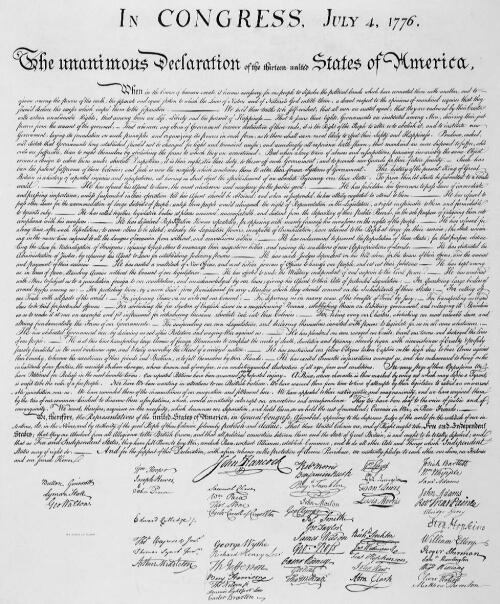
Celebrating the 2nd Anniversay of Police Leadership Blog
July 4th marks the 2nd anniversary of this site. Since the inception of this site over 1,000 hits have been recorded.
Thursday, June 28, 2007
Thursday, June 21, 2007
ROLL CALL

Roll Call
Tactical Thinking
The only way to truly be prepared for a critical incident is to believe in
your mind "When is it going to happen to me?" instead of "Will it happen to me?"
The first question carries the advantage of reinforcing in your mind the fact
that at any time you may be face with a life and death situation. By being
continually aware of this, you will be more alert, knowing that each call for
service could mean the ultimate test of your training and experience.
your mind "When is it going to happen to me?" instead of "Will it happen to me?"
The first question carries the advantage of reinforcing in your mind the fact
that at any time you may be face with a life and death situation. By being
continually aware of this, you will be more alert, knowing that each call for
service could mean the ultimate test of your training and experience.
An officer who asks, "what if it happens to me?" has not fully accepted the
fact it can happen to him/her. The only officer less prepared is the one who
does not even ask this question, but states that a critical incident always
happens to someone else will never be fully prepared for the day that it happens
to him/her. This is the officer who never takes training seriously. He/She can
usually be found in the back of the room during training sessions, makes jokes
or doodling on his/her note pad (if he/she bothered to bring a pen), or
otherwise making his boredom known, regardless of the topic being discussed.
He/She shoots his/her weapon at the range only when required to do so, and does
not feel the need to practice.
fact it can happen to him/her. The only officer less prepared is the one who
does not even ask this question, but states that a critical incident always
happens to someone else will never be fully prepared for the day that it happens
to him/her. This is the officer who never takes training seriously. He/She can
usually be found in the back of the room during training sessions, makes jokes
or doodling on his/her note pad (if he/she bothered to bring a pen), or
otherwise making his boredom known, regardless of the topic being discussed.
He/She shoots his/her weapon at the range only when required to do so, and does
not feel the need to practice.
His/Her attitude toward training is carried over into his use of tactics and
is easily observed by anyone with even minimal training in survival skills.
He/She parks directly in front of the complainant’s house when responding to a
call, regardless of whether he/she is there to take a report or investigate a
disturbance. He/She can be seen leaning into the drivers window of a vehicle he
has stopped, as if the driver is someone he/she has known all his life. He/She
scoffs at those who use good tactics, believing that they are over zealous, and
that there is no reason to be least bit cautious. He/She never wears body armor
because it’s too hot, or too uncomfortable, believing he/she will die when it’s
his/her "time" regardless of how careful he/she is.
Author unknown.
is easily observed by anyone with even minimal training in survival skills.
He/She parks directly in front of the complainant’s house when responding to a
call, regardless of whether he/she is there to take a report or investigate a
disturbance. He/She can be seen leaning into the drivers window of a vehicle he
has stopped, as if the driver is someone he/she has known all his life. He/She
scoffs at those who use good tactics, believing that they are over zealous, and
that there is no reason to be least bit cautious. He/She never wears body armor
because it’s too hot, or too uncomfortable, believing he/she will die when it’s
his/her "time" regardless of how careful he/she is.
Author unknown.
Wednesday, June 20, 2007


Tuesday, April 17, 2007
Roll Call
In light of the recent shootings in Virginia, all patrols are recommended to carry additional ammunition. Pedagogue recommends carrying an additional 100 rounds of shotgun and 100 rounds for your issued service weapon.
Monday, February 19, 2007
Concepts of Leadership
Leading & Leadership
Goals Your thinking skills can be considered directional skills because they set the direction for your organization. They provide vision, purpose, and goal definition. These are your eyes and ears to the future, allowing you to recognize the need for change, when to make it, how to implement it, and how to manage it. You find vision by reaching for any available reason to change, grow, and improve. Just as you perform preventive maintenance on your car, you must perform preventive maintenance on your organization. Do NOT believe in the old adage, "If it ain't broke, don't fix it," for the people who do, go broke! Treat every project as a change effort. Treat every job as a new learning experience.
Good organizations convey a strong vision of where they will be in the future. As a leader, you have to get your people to trust you and be sold on your vision. Using the leadership tools described in this guide and being honest and fair in all you do will provide you with the ammo you need to gain their trust. To sell them on your vision, you need to possess energy and display a positive attitude that is contagious. People want a strong vision of where they are going. No one wants to be stuck in a dead-end company going nowhere...or a company headed in the wrong direction. They want to be involved with a winner! And your people are the ones who will get you to that goal. You cannot do it alone!
When setting goals, keep these points in mind:
They should be realistic and attainable.
They should improve the organization (moral, monetary, etc.).
All the people should be involved in the goal-setting process.
A program should be developed to achieve each goal. In addition, there are four characteristics (U.S. Army Handbook, 1973) of goal setting:
Goal Difficulty: Increasing your employees' goal difficulty increases their challenges and enhances the amount of effort expended to achieve them. The more difficult goals lead to increased performance if they seem feasible. If they seem too high, employees will give up when they fail to achieve them.
Goal Specificity: When given specific goals, employees tend to perform higher. Telling them to do their best or giving no guidance increases ambiguity about what is expected. Employees need a set goal or model in order to display the correct behavior.
Feedback: Providing feedback enhances the effects of goal setting. Performance feedback keeps their behavior directed on the right target and encourages them to work harder to achieve the goal.
Participation in Goal Setting: Employees who participate in the process, generally set higher goals than if the goals were set for them. It also affects their belief that the goals are obtainable and increases their motivation to achieve them.
The Six Steps of Goal SettingAlthough finding a vision can be quite a creative challenge, the process of getting that vision implemented can be fairly easy if you follow the six steps of:Vision - Goals - Objectives - Tasks - Time Lines - Follow Up:
Step 1 - VisionThe first step in setting goals and priorities is to personally develop what the organization should look like at some point in the future. A junior leader, such as a supervisor or line manager, will mainly be concerned with a department, section, or small group of people. While senior leaders set the vision for the entire organization. However, both types of visions need to support the organization's goals.
The mission of the organization is crucial in determining your vision. Your vision needs to coincide with the big picture. The term "vision" suggests a mental picture of what the future organization will look like. The concept also implies a later time horizon. This time horizon tends to be mid to long term in nature, focusing on as much as 2, 5, or even 10 years in the future for visions affecting the entire organization. However, leaders such as supervisors or line managers tend to have shorter time horizon visions, normally 6 months to a year.
The concept of a vision has become a popular term within academic, government, defense, and corporate circles. This has spawned many different definitions of vision. But, the vision you want, should be a picture of where you want your department to be at a future date. For example, try to picture what your department would look like if it was perfect, or what the most efficient way to produce your product would look like, or perhaps if your budget was reduced by 10 percent, how you could still achieve the same quality product.
Vilfredo Pareto, a 19th century economist, theorized that most effects come from relatively few causes; that is, 80% of the effects come from 20% of the possible causes. For example, 20% of the inventory items in the supply chain of an organization accounts for 80% of the inventory value.
Some leaders fall into the time wasting trap of going after the 80% of items that only have a value of 20% of the total net worth. Your visions need to picture the 20% that will have the greatest impact on your organization. Although it is nice to have small victories every now and then by going that easy 80%, spend the majority of your time focusing on the few things that will have the greatest impact...that is what a good leader does.
Once you have your vision, it needs to be framed in general, unmeasurable terms and communicated to your team. Your team then develops the ends (objectives), ways (concepts), and means (resources) to achieve the vision.
Step 2 - GoalsThe second step involves establishing goals, with the active participation of the team. Goals are also stated in unmeasurable terms, but they are more focused. For example, "The organization must reduce transportation costs." This establishes the framework of the your vision. Follow the Six Steps of Goal Setting described above.
Step 3 - ObjectivesDefinable objectives provide a way of measuring the movement towards vision achievement. This is the real strategy of turning visions into reality. It is the crossover mechanism between your forecast of the future and the envisioned, desired future. Objectives are stated in precise, measurable terms such as "By the end of the next quarter, the shipping department will use one parcel service for shipping items under 100 pounds and one motor carrier for shipping items over a hundred pounds." The aim is to get general ownership by the entire team.
Step 4 - TasksThe fourth step is to determine tasks. Tasks are the means for accomplishing objectives. Tasks are concrete, measurable events that must occur. An example might be, "The transportation coordinator will obtain detailed shipping rates from at least 10 motor carriers."
Step 5 - Time LinesThis step establishes a priority for the tasks. Since time is precious and many tasks must be accomplished before another can begin, establishing priorities helps your team to determine the order in which the tasks must be accomplished and by what date. For example, "The shipping rates will be obtained by May 9."
Step 6 - Follow-upThe final step is to follow up, measure, and check to see if the team is doing what is required. This kind of leader involvement validates that the stated priorities are worthy of action. For the leader it demonstrates her commitment to see the matter through to a successful conclusion. Also, note that validating does not mean to micro-manage. Micro-management places no trust in others, where as following-up determines if the things that need to get done are in fact getting done.
Goals Your thinking skills can be considered directional skills because they set the direction for your organization. They provide vision, purpose, and goal definition. These are your eyes and ears to the future, allowing you to recognize the need for change, when to make it, how to implement it, and how to manage it. You find vision by reaching for any available reason to change, grow, and improve. Just as you perform preventive maintenance on your car, you must perform preventive maintenance on your organization. Do NOT believe in the old adage, "If it ain't broke, don't fix it," for the people who do, go broke! Treat every project as a change effort. Treat every job as a new learning experience.
Good organizations convey a strong vision of where they will be in the future. As a leader, you have to get your people to trust you and be sold on your vision. Using the leadership tools described in this guide and being honest and fair in all you do will provide you with the ammo you need to gain their trust. To sell them on your vision, you need to possess energy and display a positive attitude that is contagious. People want a strong vision of where they are going. No one wants to be stuck in a dead-end company going nowhere...or a company headed in the wrong direction. They want to be involved with a winner! And your people are the ones who will get you to that goal. You cannot do it alone!
When setting goals, keep these points in mind:
They should be realistic and attainable.
They should improve the organization (moral, monetary, etc.).
All the people should be involved in the goal-setting process.
A program should be developed to achieve each goal. In addition, there are four characteristics (U.S. Army Handbook, 1973) of goal setting:
Goal Difficulty: Increasing your employees' goal difficulty increases their challenges and enhances the amount of effort expended to achieve them. The more difficult goals lead to increased performance if they seem feasible. If they seem too high, employees will give up when they fail to achieve them.
Goal Specificity: When given specific goals, employees tend to perform higher. Telling them to do their best or giving no guidance increases ambiguity about what is expected. Employees need a set goal or model in order to display the correct behavior.
Feedback: Providing feedback enhances the effects of goal setting. Performance feedback keeps their behavior directed on the right target and encourages them to work harder to achieve the goal.
Participation in Goal Setting: Employees who participate in the process, generally set higher goals than if the goals were set for them. It also affects their belief that the goals are obtainable and increases their motivation to achieve them.
The Six Steps of Goal SettingAlthough finding a vision can be quite a creative challenge, the process of getting that vision implemented can be fairly easy if you follow the six steps of:Vision - Goals - Objectives - Tasks - Time Lines - Follow Up:
Step 1 - VisionThe first step in setting goals and priorities is to personally develop what the organization should look like at some point in the future. A junior leader, such as a supervisor or line manager, will mainly be concerned with a department, section, or small group of people. While senior leaders set the vision for the entire organization. However, both types of visions need to support the organization's goals.
The mission of the organization is crucial in determining your vision. Your vision needs to coincide with the big picture. The term "vision" suggests a mental picture of what the future organization will look like. The concept also implies a later time horizon. This time horizon tends to be mid to long term in nature, focusing on as much as 2, 5, or even 10 years in the future for visions affecting the entire organization. However, leaders such as supervisors or line managers tend to have shorter time horizon visions, normally 6 months to a year.
The concept of a vision has become a popular term within academic, government, defense, and corporate circles. This has spawned many different definitions of vision. But, the vision you want, should be a picture of where you want your department to be at a future date. For example, try to picture what your department would look like if it was perfect, or what the most efficient way to produce your product would look like, or perhaps if your budget was reduced by 10 percent, how you could still achieve the same quality product.
Vilfredo Pareto, a 19th century economist, theorized that most effects come from relatively few causes; that is, 80% of the effects come from 20% of the possible causes. For example, 20% of the inventory items in the supply chain of an organization accounts for 80% of the inventory value.
Some leaders fall into the time wasting trap of going after the 80% of items that only have a value of 20% of the total net worth. Your visions need to picture the 20% that will have the greatest impact on your organization. Although it is nice to have small victories every now and then by going that easy 80%, spend the majority of your time focusing on the few things that will have the greatest impact...that is what a good leader does.
Once you have your vision, it needs to be framed in general, unmeasurable terms and communicated to your team. Your team then develops the ends (objectives), ways (concepts), and means (resources) to achieve the vision.
Step 2 - GoalsThe second step involves establishing goals, with the active participation of the team. Goals are also stated in unmeasurable terms, but they are more focused. For example, "The organization must reduce transportation costs." This establishes the framework of the your vision. Follow the Six Steps of Goal Setting described above.
Step 3 - ObjectivesDefinable objectives provide a way of measuring the movement towards vision achievement. This is the real strategy of turning visions into reality. It is the crossover mechanism between your forecast of the future and the envisioned, desired future. Objectives are stated in precise, measurable terms such as "By the end of the next quarter, the shipping department will use one parcel service for shipping items under 100 pounds and one motor carrier for shipping items over a hundred pounds." The aim is to get general ownership by the entire team.
Step 4 - TasksThe fourth step is to determine tasks. Tasks are the means for accomplishing objectives. Tasks are concrete, measurable events that must occur. An example might be, "The transportation coordinator will obtain detailed shipping rates from at least 10 motor carriers."
Step 5 - Time LinesThis step establishes a priority for the tasks. Since time is precious and many tasks must be accomplished before another can begin, establishing priorities helps your team to determine the order in which the tasks must be accomplished and by what date. For example, "The shipping rates will be obtained by May 9."
Step 6 - Follow-upThe final step is to follow up, measure, and check to see if the team is doing what is required. This kind of leader involvement validates that the stated priorities are worthy of action. For the leader it demonstrates her commitment to see the matter through to a successful conclusion. Also, note that validating does not mean to micro-manage. Micro-management places no trust in others, where as following-up determines if the things that need to get done are in fact getting done.
Thursday, February 15, 2007
Circumstances that would justify a "Terry-Frisk"
Hour of the stop- very late or very early. (Night time stop)
The absence of other traffic in the area leading to the isolation of the officer/trooper.
Knowledge that the area of the stop is a heightened crime area.
Highly erratic driving prior to the stop.
Additional evasive action on the part of the motorist, such as an unreasonable delay in stopping his vehicle upon being signaled to do so by the officer/trooper.
Other evasive action on the part of the driver or a passenger, including a full, unobstructed view of the driver or a passenger reaching under the seat in an attempt to grab something or hide something: ie, a "very pronounced" threatening gesture.
The occupants of the vehicle outnumbering the officer(s) present.
The plain-view observation of a weapon, ammunition or holster.
observing a large/suspicious bulge.
Absence of a driver’s license or satisfactory identification, either for the motorist or vehicle.
Lying to the police, for example, lying about a furtive movement.
Prior knowledge that the driver/occupant is armed.
Prior knowledge that the driver/occupant is a substantial dealer in narcotics.
Presence of other incriminating information about the driver/occupant.
The affirmative, reasonable statement by the investigation officer/trooper that he feared he was in danger.
Note: Some of the listed factors would justify a Terry Frisk in and of themselves. However, other factors would need to be coupled together to Justify a Terry Frisk.
*This is a guide. Certainly there are additional factors that can unfold in making a determination for a Terry Frisk. Each circumstance is unique.*
The absence of other traffic in the area leading to the isolation of the officer/trooper.
Knowledge that the area of the stop is a heightened crime area.
Highly erratic driving prior to the stop.
Additional evasive action on the part of the motorist, such as an unreasonable delay in stopping his vehicle upon being signaled to do so by the officer/trooper.
Other evasive action on the part of the driver or a passenger, including a full, unobstructed view of the driver or a passenger reaching under the seat in an attempt to grab something or hide something: ie, a "very pronounced" threatening gesture.
The occupants of the vehicle outnumbering the officer(s) present.
The plain-view observation of a weapon, ammunition or holster.
observing a large/suspicious bulge.
Absence of a driver’s license or satisfactory identification, either for the motorist or vehicle.
Lying to the police, for example, lying about a furtive movement.
Prior knowledge that the driver/occupant is armed.
Prior knowledge that the driver/occupant is a substantial dealer in narcotics.
Presence of other incriminating information about the driver/occupant.
The affirmative, reasonable statement by the investigation officer/trooper that he feared he was in danger.
Note: Some of the listed factors would justify a Terry Frisk in and of themselves. However, other factors would need to be coupled together to Justify a Terry Frisk.
*This is a guide. Certainly there are additional factors that can unfold in making a determination for a Terry Frisk. Each circumstance is unique.*
Subscribe to:
Posts (Atom)